The short answer
For a tile court, ask for a concrete pad the size of your kit plus a small margin, with a flat broom finish and a gentle slope of about 1 percent in one direction for drainage. Have control joints cut as usual, and follow your contractor's guidance on cure time before laying tiles.
Size the pad to the kit
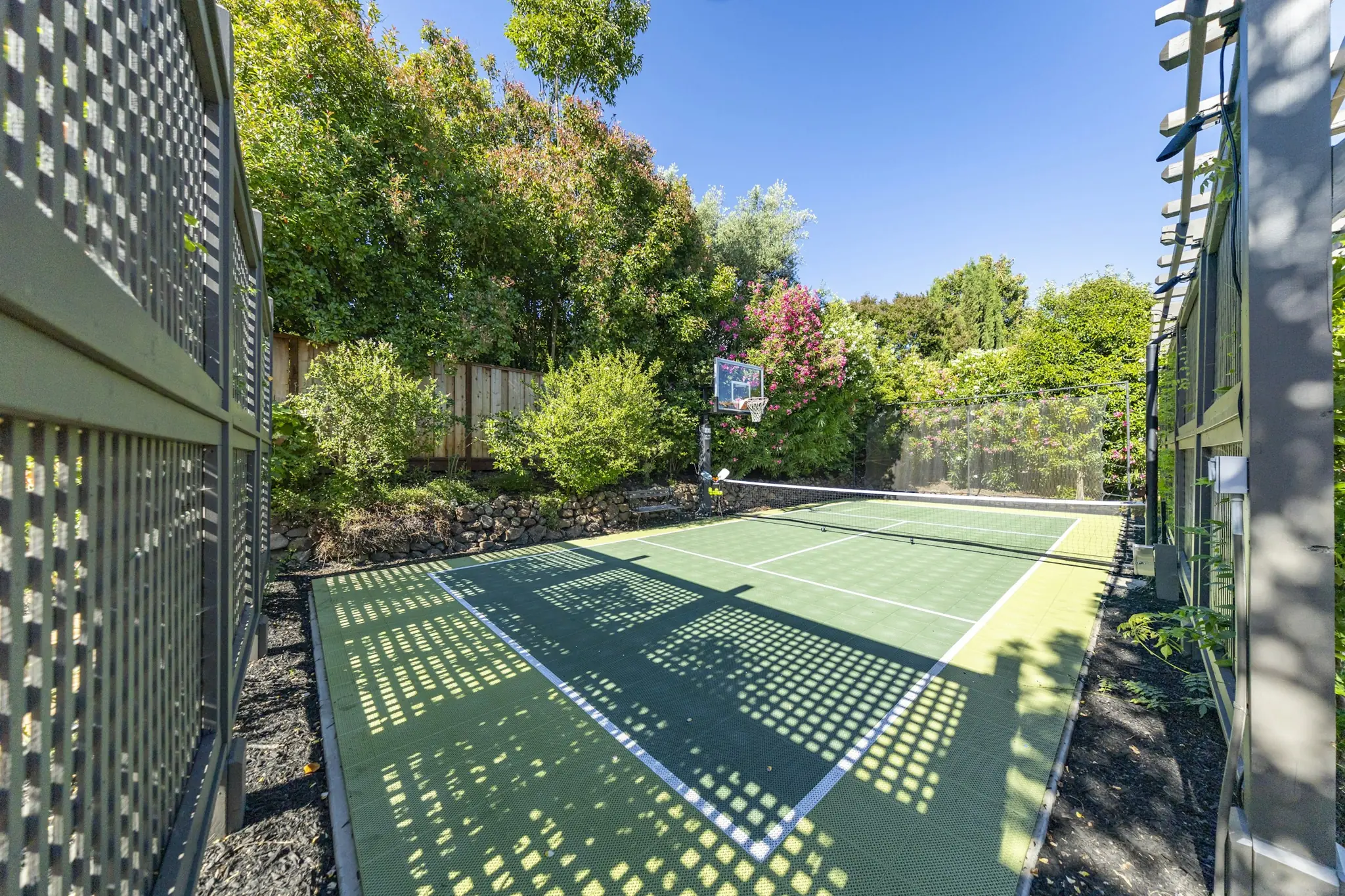
Choose the kit first, then size the pad. A pad that matches the kit footprint plus a small margin on each side leaves room for the expansion gap and keeps the edge pieces fully supported.
Tiles are roughly one foot square, so a kit can be resized in steps of about a foot. If the yard forces an odd size, send the pad dimensions and the layout can be drawn to suit.
| Court | Kit footprint |
|---|---|
| Starter basketball half court | 25 x 20 ft |
| Classic basketball half court | 30 x 25 ft |
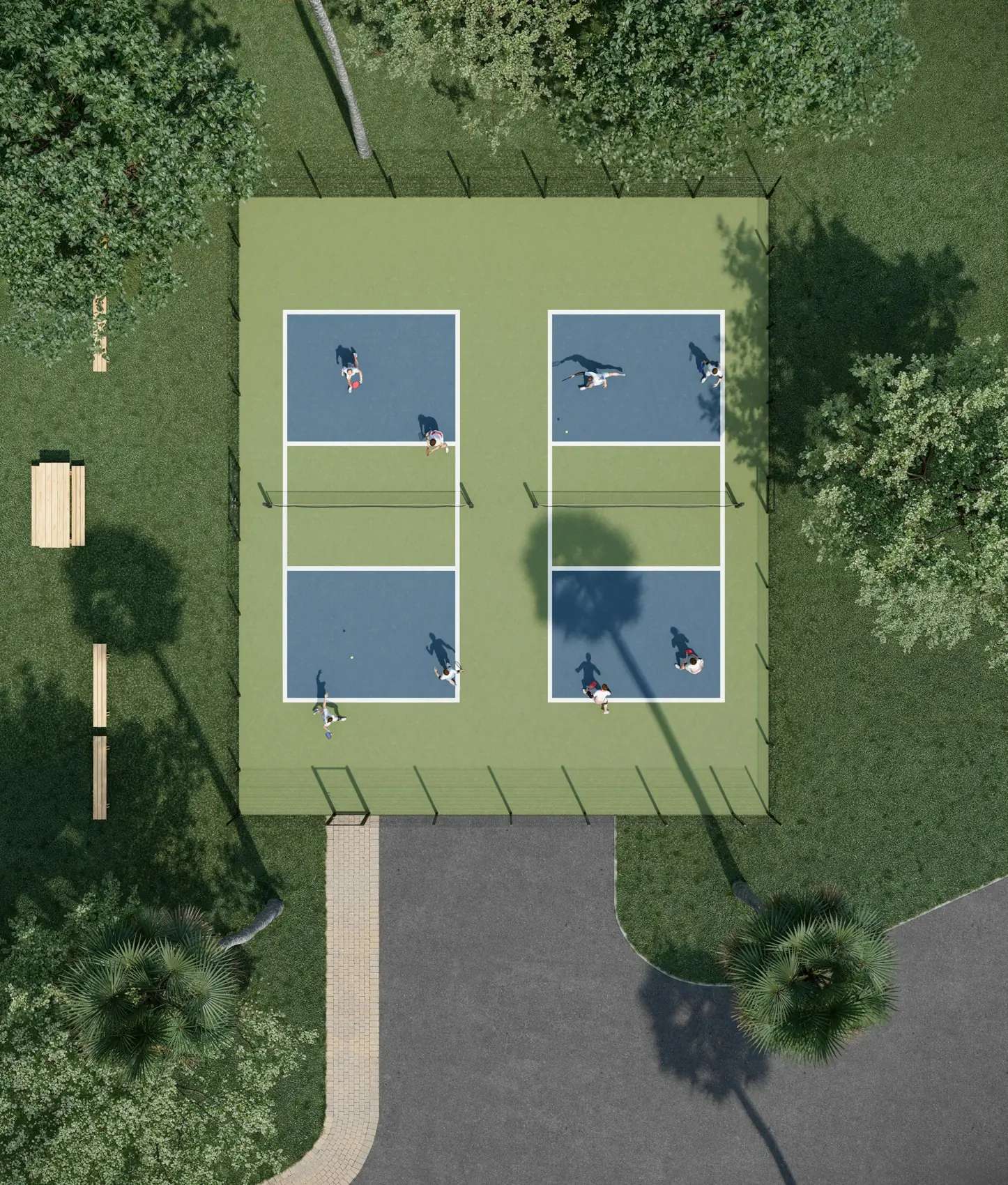
| Compact pickleball | 52 x 28 ft |
| Recommended pickleball or multi-game | 60 x 30 ft |
| Regulation tennis | 120 x 60 ft |
Finish and flatness
Ask for a flat, light broom finish. Tiles follow whatever is under them, so humps and dips in the slab turn into uneven bounce on the court.
Flat matters more than pretty. The concrete will be covered, so there is no need to pay for a decorative finish.
Slope and drainage
A court pad should be flat but not dead level. Ask for a gentle slope of about 1 percent in a single plane so water runs off one side. On a 30 ft wide pad that is a little under 4 in of fall across the width.
Open-grid tiles let rain pass through to the concrete, so the water still needs somewhere to go. Slope the pad away from the house and toward lawn or a drain. Avoid a crown down the middle. A single plane plays truer.
Control joints, footings and sleeves
Concrete cracks, and control joints tell it where. Your contractor will cut or tool them at a spacing that suits the slab. The tiles bridge straight over them.
Tell the contractor about anything that goes in the ground before the pour. An in-ground hoop needs its own footing. Permanent net posts need sleeves. Mark both from your court drawing.
Slab thickness, base preparation and reinforcement depend on your soil and frost conditions. Leave those calls to the contractor, and check setbacks and lot coverage with your local municipality before booking the pour.
Curing before the tiles go down
New concrete needs time to cure before it is covered or loaded. Follow your contractor's guidance on when the pad is ready. Keep vehicles and heavy loads off the slab until they say so. Use the wait to settle your tile colours and line layout, and sweep the pad clean before the first tile goes down.
When existing asphalt or an old slab is good enough
You may not need new concrete at all. A driveway, patio or old asphalt pad can carry a court if it is firm, fairly flat and sheds water. Walk it after rain and check these points.
- Small cracks with both sides at the same height are fine
- Raised edges should be ground down
- Dips that hold water should be filled
- Soft, crumbling or heaved areas need repair before any tile goes on
Reviewed November 2026. Kit prices are in Canadian dollars before freight and tax and are confirmed on your quote.